
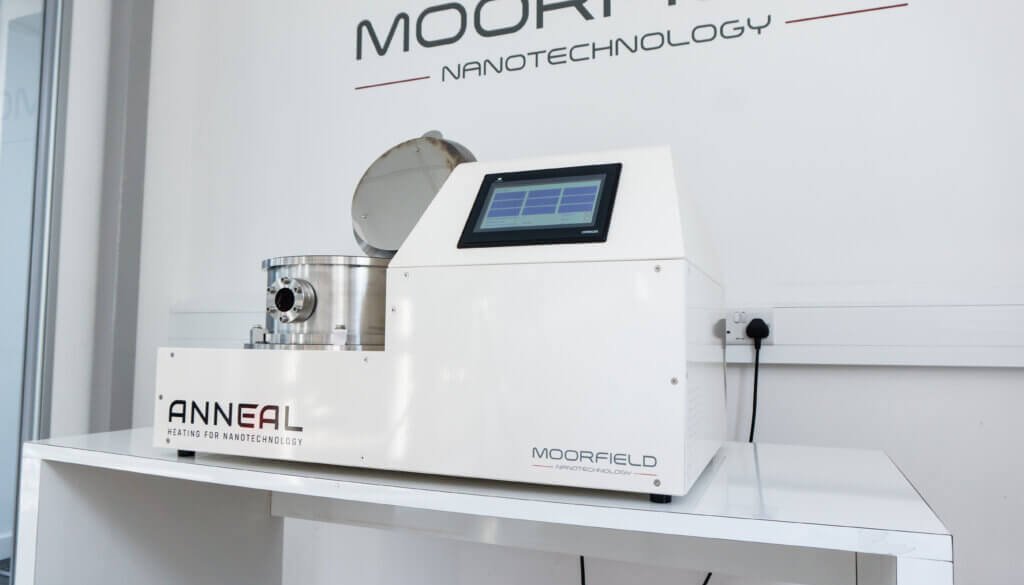
nanoANNEAL

Thermal Processing System
nanoANNEAL Thermal Processing System
Compact annealing for thermal process screening, contact optimisation and thin-film interface development.
nanoANNEAL helps research teams develop and screen thermal process conditions locally, reducing dependence on larger shared systems for early-stage process development.
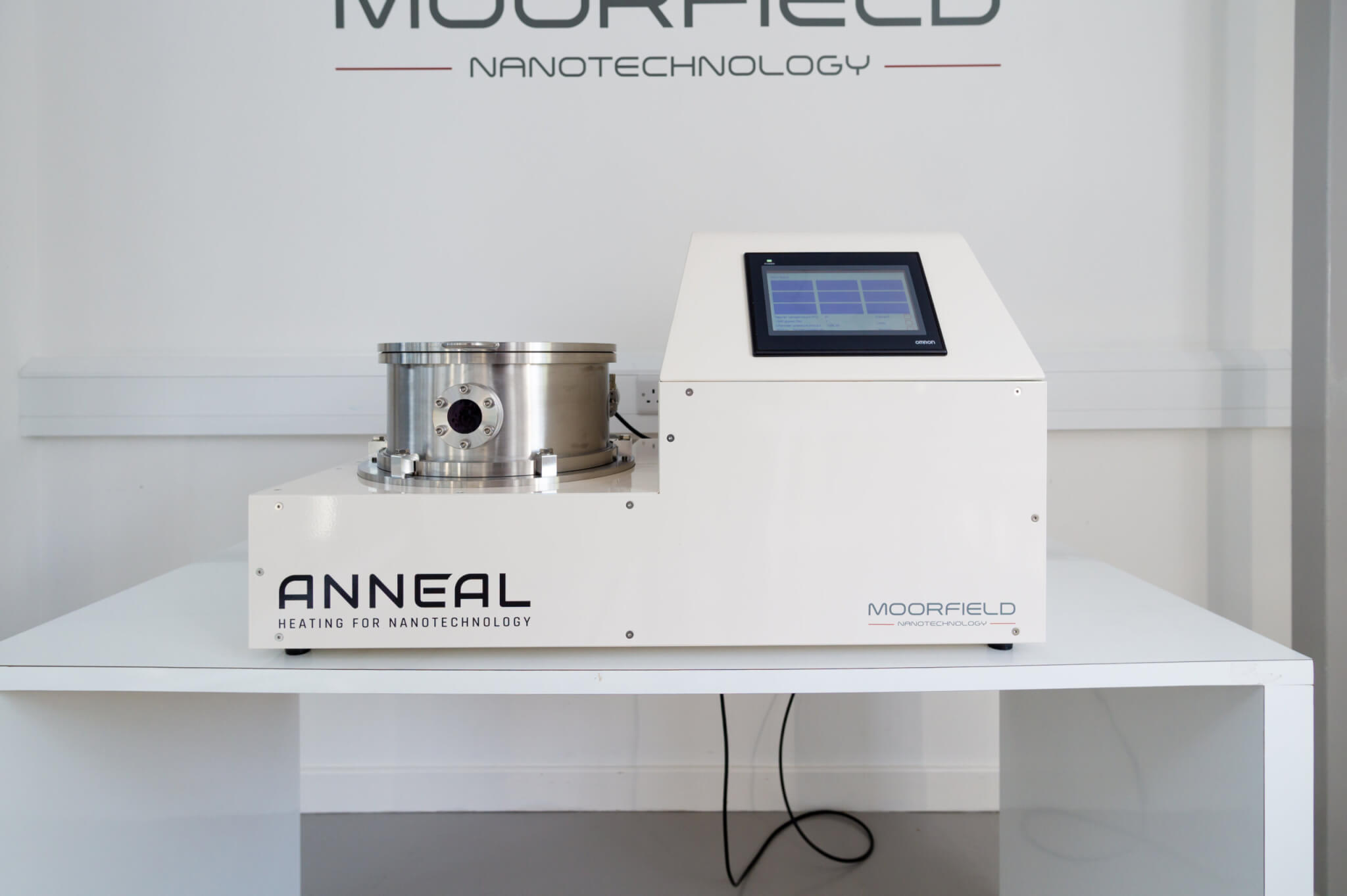
Product gallery
nanoANNEAL image carousel

Research-grade capability without enterprise complexity
nanoANNEAL is positioned for research teams that need controllable thin-film process access, practical laboratory integration and clear configuration choices.
- Fast process screening for thermal windows and recipe development
- Useful for contacts, crystallisation and interface tuning
- Compact integration for universities and R&D laboratories
- Recipe-led workflows for repeatable thermal process development
- Practical local access without production-scale infrastructure
Typical configurations
Use these examples as starting points. Moorfield can refine the final specification around your materials, substrates, gases, recipes and workflow constraints.
Contact optimisation
For tuning contact behaviour and metal/semiconductor interfaces.
- Thermal recipe screening
- Thin-film interface focus
- Device development fit
Crystallisation studies
For research teams investigating film structure and thermal processing windows.
- Controlled annealing
- Materials process development
- Repeatable local access
Thermal process R&D
For labs needing fast, practical thermal treatment workflows.
- Compact platform
- Research-friendly controls
- Application-led configuration
Not sure which configuration is right for your research?
Discuss Your ApplicationKey features
Dedicated process capability
Focused platform design for the target process rather than generic equipment messaging.
Research workflow fit
Built for universities, R&D laboratories and pilot development environments.
Controlled operation
Recipe-led controls and application-specific configuration improve repeatability.
Compact laboratory integration
Add capability close to the research team without enterprise-scale infrastructure.
Application-led specification
Moorfield can configure the system around materials, substrates and process objectives.
Serviceable design
Designed for practical operation, maintenance and long-term research use.
Options and upgrades
Configure the platform around the process approach, substrate handling, automation and laboratory services your application needs.
Technical specifications
A scannable overview of the core platform. Exact specifications depend on final configuration.
| System type | Thermal processing and annealing |
|---|---|
| Process type | Controlled thermal processing |
| Best fit | Contacts, crystallisation, semiconductor materials and interfaces |
| Research value | Thermal process development and screening |
| Applications | PV, semiconductor materials, coatings and advanced materials research |
Applications
Related Moorfield application-library examples from thin-film process-development workflows where thermal treatment, contact formation or post-deposition process planning may sit alongside deposition and etch workflows. Product cited is shown on each card.
Enhancing the Performance and Photostability
Publication Title: Enhancing the Performance and Photostability of Perovskite Solar Cells with a Multifunctional Light‐Management Composite
Lead facility: Aalto University
Moorfield product cited: MiniLab 090
Read applicationEffect of Pt coating on electrochemical behaviour
Publication Title: Engineering Cu 2 O Nanowire Surfaces for Photoelectrochemical Hydrogen Evolution Reaction
Lead facility: Luleå University of Technology
Moorfield product cited: MiniLab 070
Read applicationHigh-Efficiency Semitransparent Solar Cells
Publication Title: High‐Efficiency Semitransparent Solar Cells Based on Magnetron Sputtered Sb 2 S 3 Thin Films
Lead facility: Luleå University of Technology
Moorfield product cited: MiniLab 070
Read applicationPhotophysics: Insights in Ultrafast Processes
Publication Title: Photophysics of Benzoxazole and Dicyano Functionalised Diketopyrrolopyrrole Derivatives: Insights into Ultrafast Processes and the Triplet State
Lead facility: Charles University
Moorfield product cited: MiniLab 070
Read applicationEvolution of TiAlSi Thin Film Coatings
Publication Title: Evolution of TiAlSi thin film coatings under varying target power in DC magnetron sputtering
Lead facility: Northumbria University
Moorfield product cited: nanoPVD-S10A
Read applicationInorganic Lead-Free Halide Films
Publication Title: Inorganic Lead-Free Halide Films
Lead facility: Not stated in publication metadata
Moorfield product cited: nanoPVD
Read applicationResources and next steps
Related systems
Build the right nanoANNEAL configuration for your research
Tell us about your materials, substrates, process gases and target films. Moorfield will help specify a practical system configuration.
nanoANNEAL
Optimised for the thermal treatment of 2D materials and wafers under controlled atmospheres.
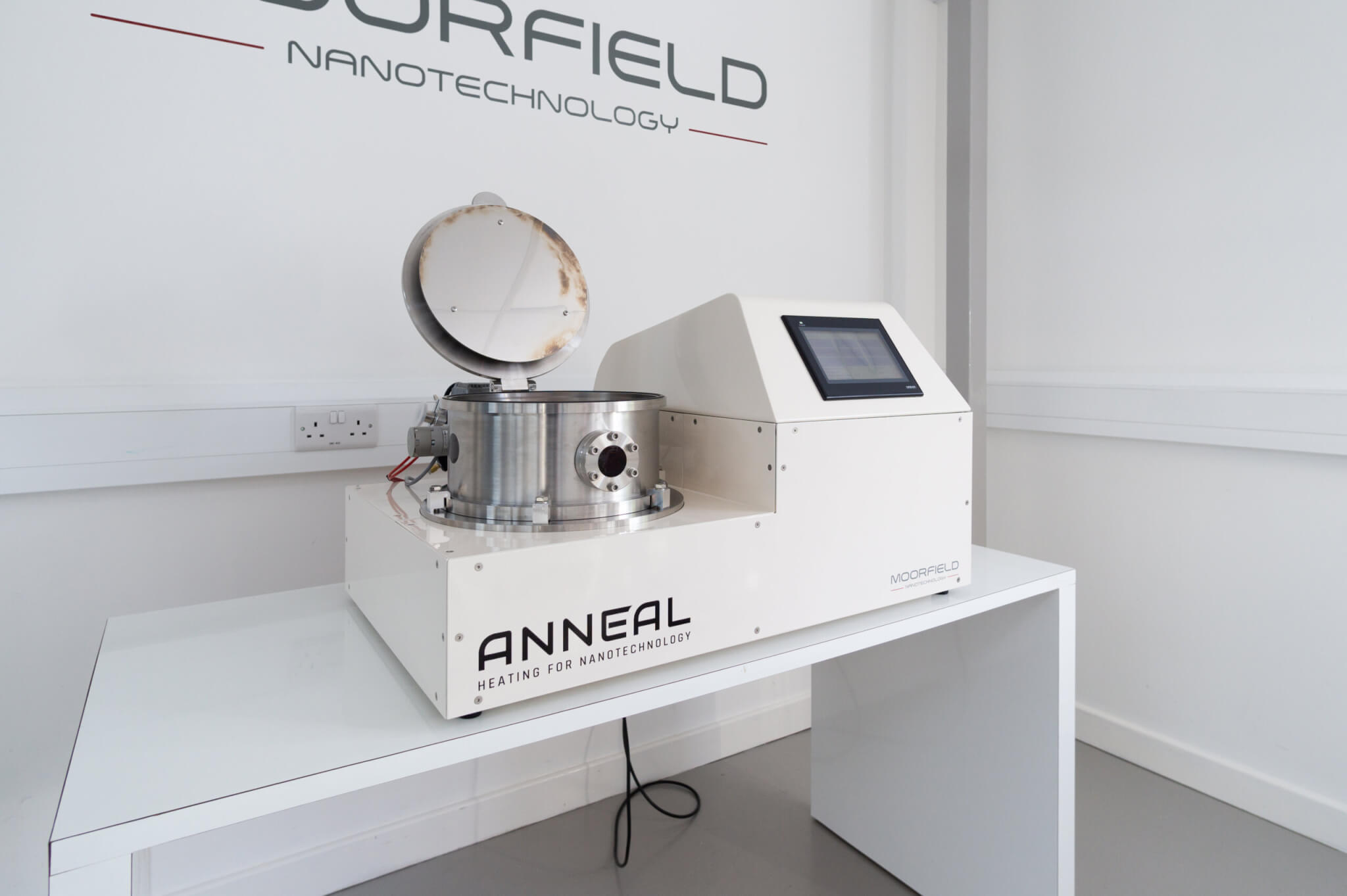
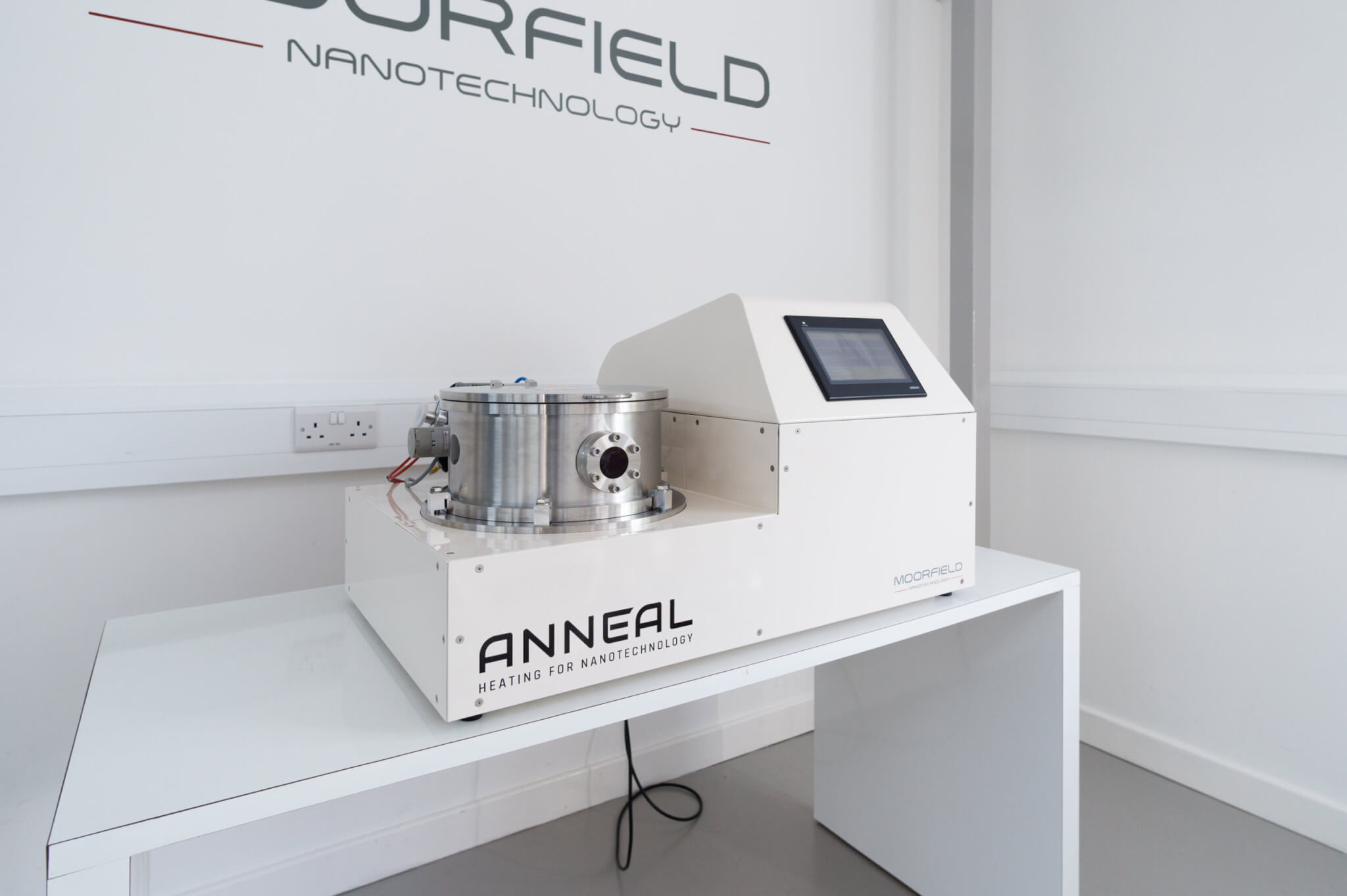
nanoANNEAL benchtop thermal anneal
The nanoANNEAL vacuum annealing system from Moorfield are optimised for the thermal treatment of wafers under controlled atmospheres.
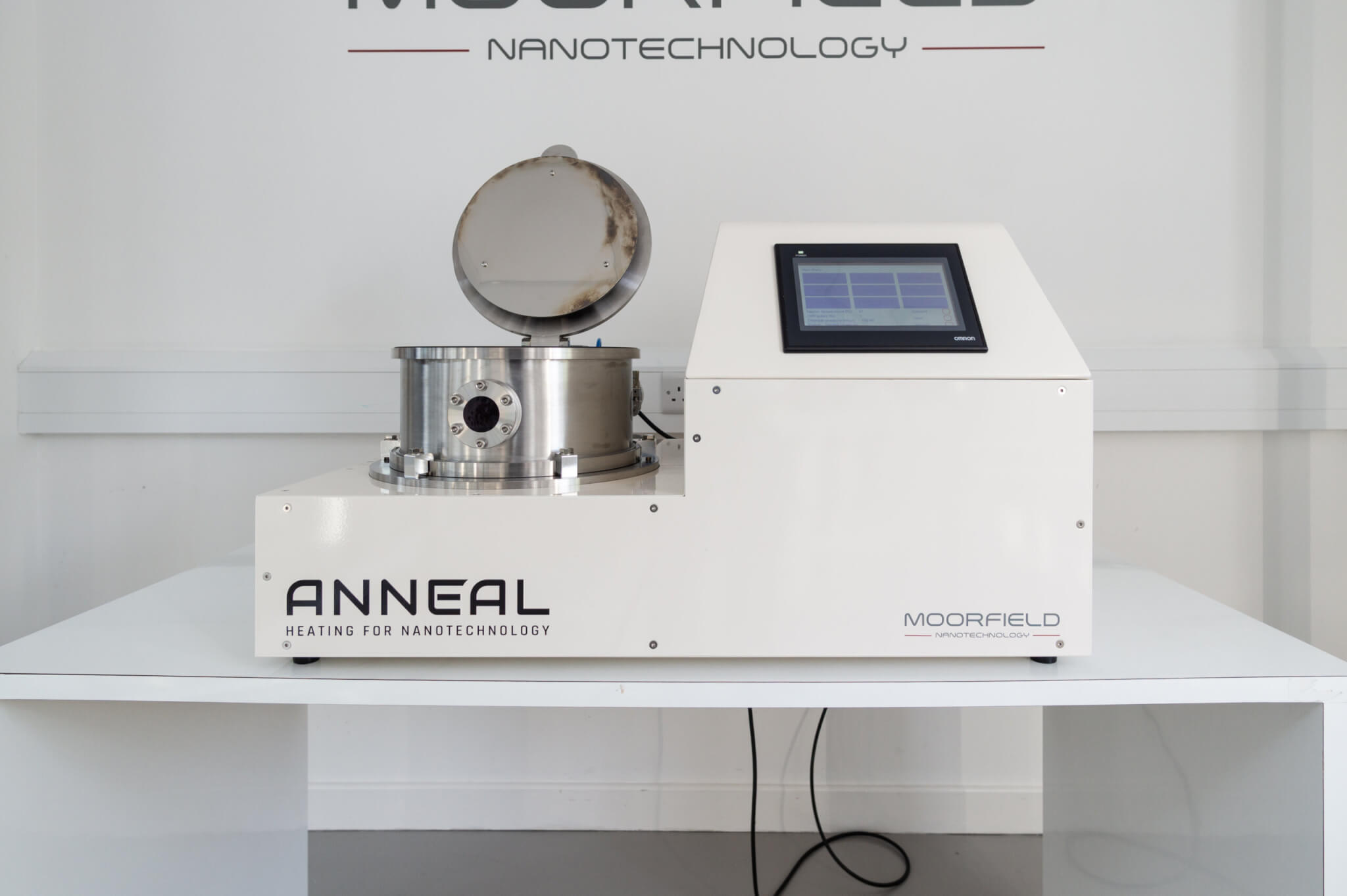
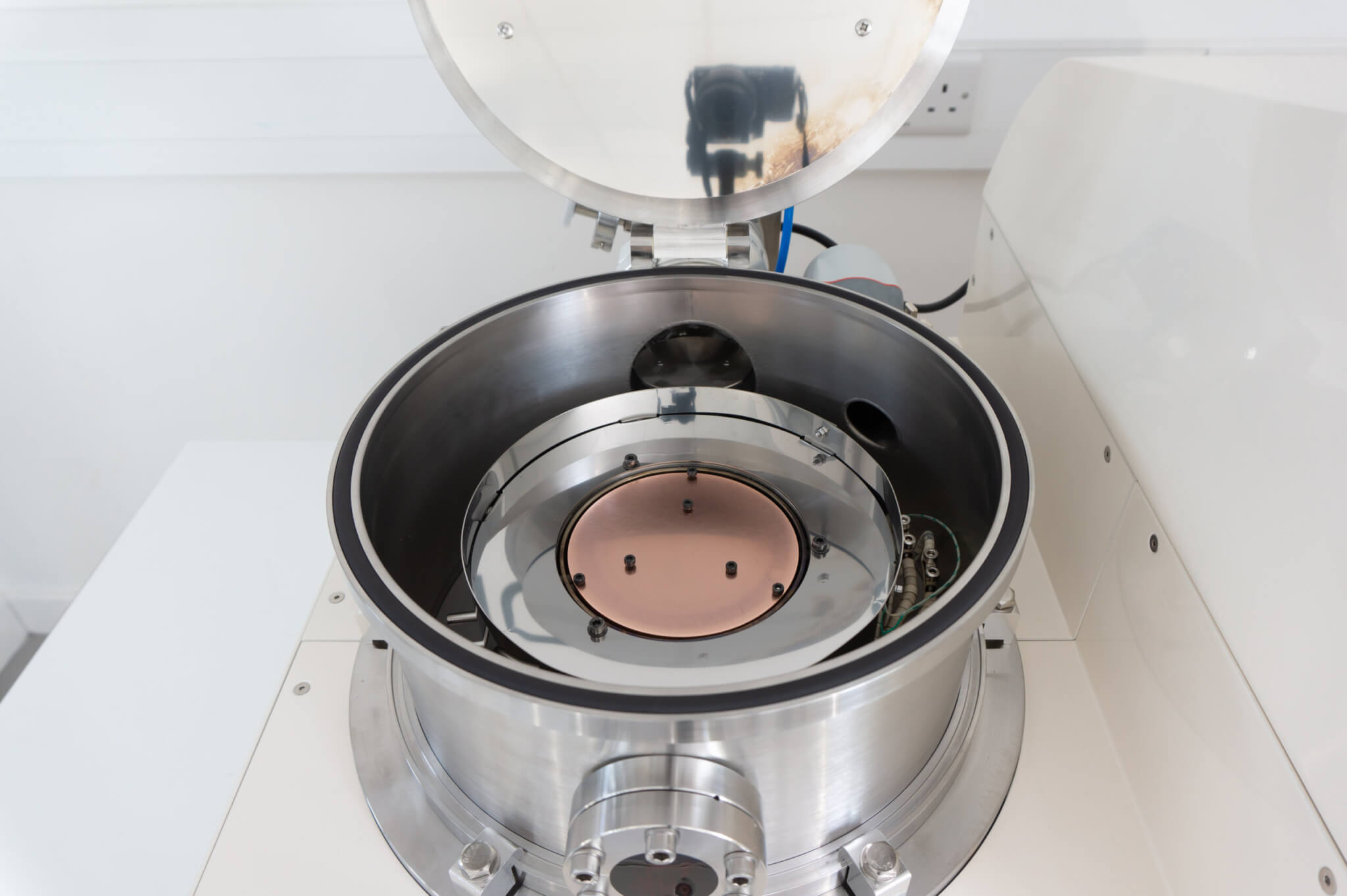
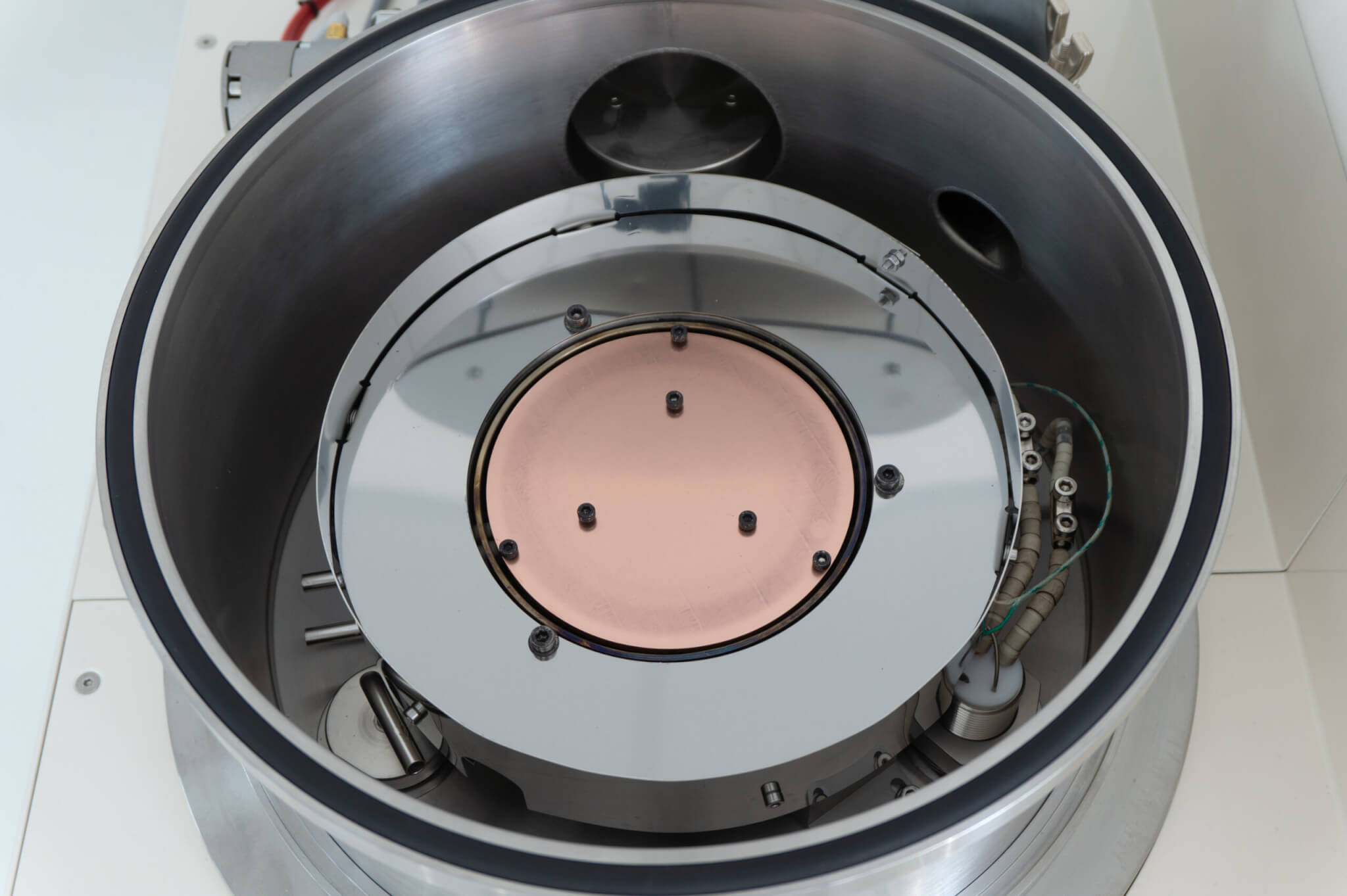
Substrates are supported face-up on stage-top platens that are situated centrally inside a stainless-steel high-vacuum chamber fitted with appropriate heat shielding and a shuttered viewport. Heating is via a heat source located beneath the platen. Maximum temperatures up to 1000°C are possible—depending on the heating technology used:
Quartz lamp: This technology uses quartz lamps to generate IR radiation. A cost-effective means of heating for substrate temperatures up to 500°C, and compatible with most atmospheres. Maximum Ramp of 0.3°C/s.
Carbon-carbon composite (CCC): Where substrate temperatures above 500 °C are required, CCC elements are used where non-oxygen compatible atmospheres are present. Suitable for heating up to 1000°C. Maximum Ramp of 8°C/s.
SiC-coated graphite: When high temperatures and oxygen resistance are required, graphite elements are coated with a resistant layer of SiC.
Maximum Ramp of 8°C/s.
For annealing under controlled atmospheres, ANNEAL systems can be fitted with up to 3 mass flow controllers (MFCs). Typical gases are Ar, O2 and N2, and full scale flow rates are flexible. All systems have wide-range gauges, but for improved accuracy, capacitance manometers are also available. In case chamber pressure is critical, automatic pressure control is available with control resolutions to 0.1 mbar.
ANNEAL systems are highly modular and can be configured for a wide range of applications.
Options
- 4″/6″ diameter substrate stages
- Quartz lamp heating up to 600°C
- Resistive element heating up to 1000°C
- MFCs for process gas introduction
- Turbomolecular/mechanical pumping systems
- Automatic pressure control
Key features
- Benchtop configuration
- Up to 6” substrate diameters
- Choice of heating technologies up to 1000°C
- Gas and pressure control
- Base pressures <5 × 10⁻⁷ mbar (with TMP)
- Easy sample access
- Define/save multiple process recipes
- Equipped for easy servicing
- Comprehensive safety features
- Cleanroom compatible
- Proven performance
Service requirements
All nanoANNEAL systems require chilled water, dry compressed air, nitrogen for venting (optional) and electrical power. Some configurations may require process gases. Exact requirements will be provided with quotations or on request.